Aria’s curiosity turned into obsession. She contacted Professor Raghav Bhandari, her mentor and former aerospace engineer who had retired after the “Great Dusk”—the global blackout that followed the 2099 solar flare. He recognized the emblem instantly. “Velamma was a joint venture between the Indian Space Agency and a clandestine consortium of private tech firms,” he whispered, eyes darting toward the window. “They were building a self‑sustaining habitat, a ‘living ship,’ meant to escape Earth before the sun’s tantrums grew too violent. The 70 denoted the seventh generation of the project, the final iteration before they planned to launch.” Aria’s mind raced. If the habitat had ever been built, where was it? And why had it never been launched?
Raghav smiled, his old hands trembling. “And the world will never forget Velamma 70.” Years later, the story of Velamma 70 became a legend taught in schools across the world. The pods traveled to distant moons, to terraformed deserts, to oceans of alien worlds. Each carried a piece of Earth’s biodiversity, a memory of the planet that had once cradled humanity. velamma 70
Inside the vessel, the central sphere flickered, and the holographic starfield aligned with the Earth’s magnetic signature. A low, resonant hum filled the water, rising to a crescendo that seemed to merge with the waves themselves. The hull’s doors, sealed for decades, began to slide open. Aria’s curiosity turned into obsession
The end.
The decision was made to initiate the activation protocol at the next full moon, when the ocean’s tides would be highest and the planet’s magnetic field would be at its peak alignment. The villagers, together with Aria and Raghav, rigged the ancient boat with solar panels salvaged from a nearby wreck, a makeshift antenna, and a series of resonant crystal rods that had been found buried near the ship’s hull. “Velamma was a joint venture between the Indian

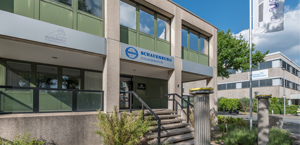
SCHAUENBURG Industrietechnik GmbH
Am Keuper 17
DE-90475 Nürnberg | Germany
Tel.: +49 9128 72 120 - 0
Fax: +49 9128 72 120 - 99
E-Mail:
www.schauenburg-industrietechnik.com ▸


Unsere Marken:
bpt Bayerische Profiltechnik®
VIGOT® Schlauchtechnik
Landingpages:
Feuerschutzschlauch ▸
MAXIMALL® Schlauchsysteme ▸
Kunststoffspritzguss ▸
Schlauchsysteme eKatalog ▸
Partnerschaften:
VIGOT® meets Braunwarth®
Überlingen, Deutschland
www.braunwarth-vigot.de ▸

Betriebsstätte Augsburg
Derchinger Str. 143
86165 Augsburg, Deutschland
Betriebsstätte Bremen
Ingolstädter Straße 7
28219 Bremen, Deutschland
Betriebsstätte Bochum
Wiescherstraße 86
44805 Bochum, Deutschland
Betriebsstätte Mülheim a.d. Ruhr
Lahnstraße 30
45478 Mülheim-Ruhr, Deutschland


Vertriebsbüro Baden-Württemberg
Adolf-Heim-Straße 11
74321 Bietigheim-Bissingen, Deutschland
Service Point Rhein-Main
Standort Hofheim am Taunus, Deutschland
www.mobile-schlauchpruefung.de ▸
© 2026 — Evergreen Deck







 Zu den Betriebsstätten ▸
 Starten Sie Ihre Karriere mit uns ▸