SPEECHTEXTER
...

Salo — Or The 120 Days Of Sodom Sub Indo

The availability and distribution of this film may vary depending on your location, and I encourage you to consider the content and potential impact before watching.

The film's narrative structure is non-linear and fragmented, reflecting Pasolini's experimental approach to storytelling. The story is presented through a series of tableaux vivants, each one showcasing a different form of depravity and cruelty. The film's use of long takes, stylized violence, and graphic content creates a sense of unease and discomfort in the viewer, mirroring the experiences of the victims. salo or the 120 days of sodom sub indo

The film is set in a post-fascist Italy and revolves around a wealthy and powerful aristocrat, Count Ranucci (played by Paolo Cavazzini), who, along with three of his peers, kidnaps a group of 16-18 year old boys and girls to subject them to extreme physical and psychological torture, humiliation, and sexual exploitation. The story is presented as a descent into madness, with the aristocrats competing with each other to see who can come up with the most depraved and sadistic games. The availability and distribution of this film may

"Salo, or the 120 Days of Sodom" (also known as "Salo" or "The 120 Days of Sodom") is a 1975 Italian art-house horror film directed by Pier Paolo Pasolini. The film is a notorious and disturbing adaptation of the Marquis de Sade's 18th-century novel of the same name. While the original novel was a work of libertine literature, Pasolini's film takes a more avant-garde and surreal approach to exploring themes of decadence, power, and the darker aspects of human nature. The film's use of long takes, stylized violence,

The film's use of homoerotic themes and imagery has also been the subject of much debate and analysis. Pasolini, who was himself a gay man, explores themes of desire, pleasure, and the complexities of human sexuality in a way that is both provocative and unsettling.

In conclusion, "Salo, or the 120 Days of Sodom" is a challenging and thought-provoking film that pushes the boundaries of what is considered acceptable in cinema. While it may be disturbing and uncomfortable to watch, it is a work of art that demands to be seen and discussed. As a commentary on the darker aspects of human nature, Pasolini's film remains a relevant and timely work, one that continues to spark debate and reflection on the nature of power, desire, and morality.

Pasolini's "Salo" is often seen as a critique of the bourgeoisie and the fascist mentality that pervaded Italian society during the 1970s. The film's portrayal of the aristocrats' complete disdain for human life and dignity serves as a commentary on the dangers of unchecked power and the erosion of moral values.

SpeechTexter is a free multilingual speech-to-text application aimed at assisting you with transcription of notes, documents, books, reports or blog posts by using your voice. This app also features a customizable voice commands list, allowing users to add punctuation marks, frequently used phrases, and some app actions (undo, redo, make a new paragraph).

SpeechTexter is used daily by students, teachers, writers, bloggers around the world.

It will assist you in minimizing your writing efforts significantly.

Voice-to-text software is exceptionally valuable for people who have difficulty using their hands due to trauma, people with dyslexia or disabilities that limit the use of conventional input devices. Speech to text technology can also be used to improve accessibility for those with hearing impairments, as it can convert speech into text.

It can also be used as a tool for learning a proper pronunciation of words in the foreign language, in addition to helping a person develop fluency with their speaking skills.

using speechtexter to dictate a text

Accuracy levels higher than 90% should be expected. It varies depending on the language and the speaker.

No download, installation or registration is required. Just click the microphone button and start dictating.

Speech to text technology is quickly becoming an essential tool for those looking to save time and increase their productivity.
Features

Powerful real-time continuous speech recognition

Creation of text notes, emails, blog posts, reports and more.

Custom voice commands

More than 70 languages supported

Technology

SpeechTexter is using Google Speech recognition to convert the speech into text in real-time. This technology is supported by Chrome browser (for desktop) and some browsers on Android OS. Other browsers have not implemented speech recognition yet.

Note: iPhones and iPads are not supported

List of supported languages:

Afrikaans, Albanian, Amharic, Arabic, Armenian, Azerbaijani, Basque, Bengali, Bosnian, Bulgarian, Burmese, Catalan, Chinese (Mandarin, Cantonese), Croatian, Czech, Danish, Dutch, English, Estonian, Filipino, Finnish, French, Galician, Georgian, German, Greek, Gujarati, Hebrew, Hindi, Hungarian, Icelandic, Indonesian, Italian, Japanese, Javanese, Kannada, Kazakh, Khmer, Kinyarwanda, Korean, Lao, Latvian, Lithuanian, Macedonian, Malay, Malayalam, Marathi, Mongolian, Nepali, Norwegian Bokmål, Persian, Polish, Portuguese, Punjabi, Romanian, Russian, Serbian, Sinhala, Slovak, Slovenian, Southern Sotho, Spanish, Sundanese, Swahili, Swati, Swedish, Tamil, Telugu, Thai, Tsonga, Tswana, Turkish, Ukrainian, Urdu, Uzbek, Venda, Vietnamese, Xhosa, Zulu.

Instructions for web app on desktop (Windows, Mac, Linux OS)


Requirements: the latest version of the Google Chrome [↗] browser (other browsers are not supported).

1. Connect a high-quality microphone to your computer.

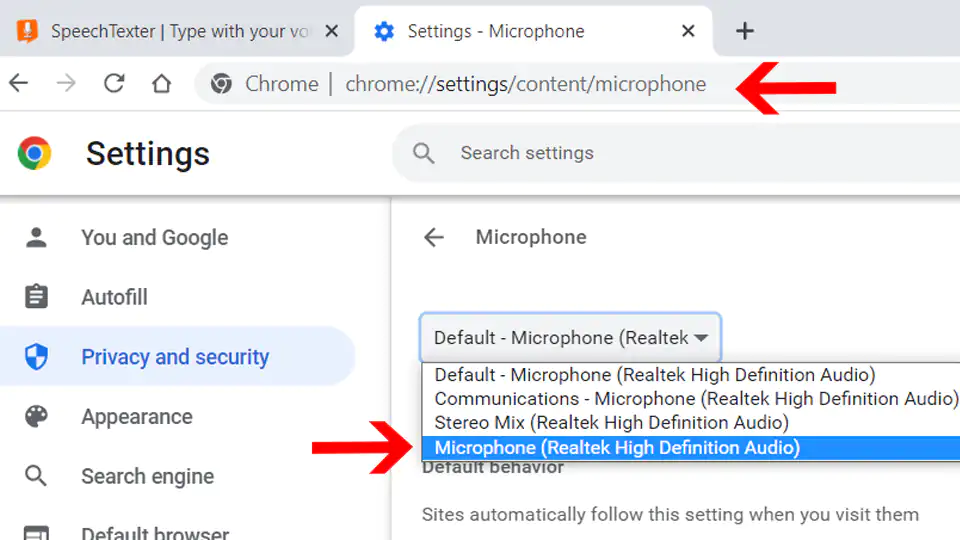
2. Make sure your microphone is set as the default recording device on your browser.

To go directly to microphone's settings paste the line below into Chrome's URL bar.

chrome://settings/content/microphone


Set microphone as default recording device

To capture speech from video/audio content on the web or from a file stored on your device, select 'Stereo Mix' as the default audio input.

3. Select the language you would like to speak (Click the button on the top right corner).

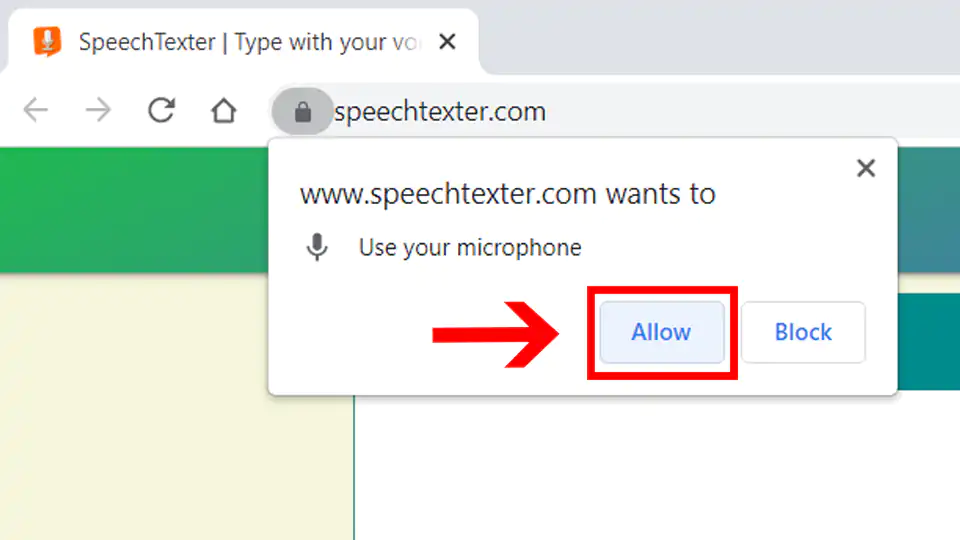
4. Click the "microphone" button. Chrome browser will request your permission to access your microphone. Choose "allow".

Allow microphone access

5. You can start dictating!

Instructions for the web app on a mobile and for the android app (the android app is no longer supported)


Requirements:
- Google app [↗] installed on your Android device.
- Any of the supported browsers if you choose to use the web app.

Supported android browsers (not a full list):
Chrome browser (recommended), Edge, Opera, Brave, Vivaldi.

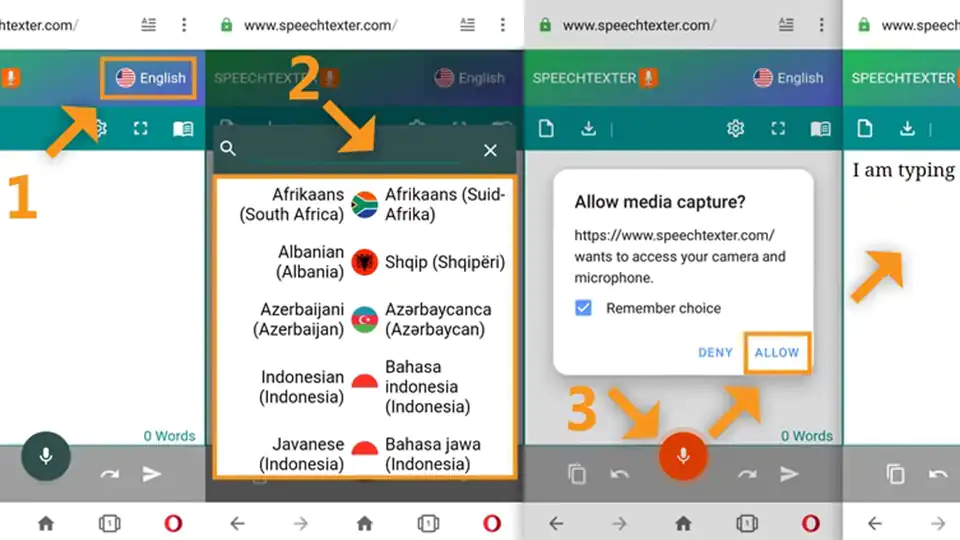
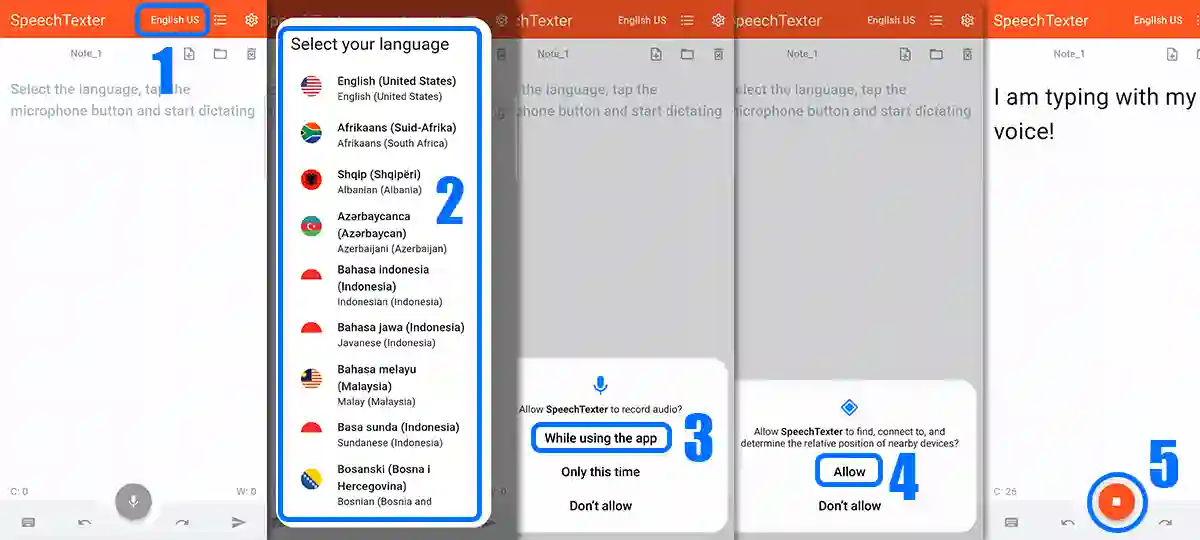
1. Tap the button with the language name (on a web app) or language code (on android app) on the top right corner to select your language.

2. Tap the microphone button. The SpeechTexter app will ask for permission to record audio. Choose 'allow' to enable microphone access.

instructions for the web app
web app

instructions for the android app
android app

3. You can start dictating!

The availability and distribution of this film may vary depending on your location, and I encourage you to consider the content and potential impact before watching.

The film's narrative structure is non-linear and fragmented, reflecting Pasolini's experimental approach to storytelling. The story is presented through a series of tableaux vivants, each one showcasing a different form of depravity and cruelty. The film's use of long takes, stylized violence, and graphic content creates a sense of unease and discomfort in the viewer, mirroring the experiences of the victims.

The film is set in a post-fascist Italy and revolves around a wealthy and powerful aristocrat, Count Ranucci (played by Paolo Cavazzini), who, along with three of his peers, kidnaps a group of 16-18 year old boys and girls to subject them to extreme physical and psychological torture, humiliation, and sexual exploitation. The story is presented as a descent into madness, with the aristocrats competing with each other to see who can come up with the most depraved and sadistic games.

"Salo, or the 120 Days of Sodom" (also known as "Salo" or "The 120 Days of Sodom") is a 1975 Italian art-house horror film directed by Pier Paolo Pasolini. The film is a notorious and disturbing adaptation of the Marquis de Sade's 18th-century novel of the same name. While the original novel was a work of libertine literature, Pasolini's film takes a more avant-garde and surreal approach to exploring themes of decadence, power, and the darker aspects of human nature.

The film's use of homoerotic themes and imagery has also been the subject of much debate and analysis. Pasolini, who was himself a gay man, explores themes of desire, pleasure, and the complexities of human sexuality in a way that is both provocative and unsettling.

In conclusion, "Salo, or the 120 Days of Sodom" is a challenging and thought-provoking film that pushes the boundaries of what is considered acceptable in cinema. While it may be disturbing and uncomfortable to watch, it is a work of art that demands to be seen and discussed. As a commentary on the darker aspects of human nature, Pasolini's film remains a relevant and timely work, one that continues to spark debate and reflection on the nature of power, desire, and morality.

Pasolini's "Salo" is often seen as a critique of the bourgeoisie and the fascist mentality that pervaded Italian society during the 1970s. The film's portrayal of the aristocrats' complete disdain for human life and dignity serves as a commentary on the dangers of unchecked power and the erosion of moral values.