Quite Imposing Plus 4 Full Crack Hot! Access
A Long‑Form Exploration of a Legend, a Landscape, and a Human Story 1. Prologue – The Whispered Name In every valley where wind sweeps the high‑grass and every town that huddles at the foot of the mountains, an old story is told around fire‑light. The elders speak of a stone that rises like a throne of the earth itself, a monolith that dominates the horizon and demands both reverence and fear. Its name, passed from lip to ear, is always rendered with the same breathless tone: the Imposing One .
Ecologically, the cracks act as . Cold air rushes down them at night, while warm air rises during the day, creating micro‑habitats that support unique lichens, mosses, and a colony of rock‑dwelling salamanders (genus Cavernula ), found nowhere else on the planet. 3. The Mythic Fabric – How “Quite Imposing” Became Legend 3.1 The First Tale: The Giant’s Footstep The earliest recorded legend comes from the Kara‑Nim oral tradition , dating back at least 4,000 years. According to the story, the Imposing One was formed when a wandering giant—named Moruok —stomped across the plain, his foot crushing the earth and raising a massive column of stone. In his arrogance, Moruok struck the stone four more times, each blow splitting the monolith with a thunderous crack. The four cracks, the tale says, are the full imprint of his rage, a warning that even the mightiest can be broken. quite imposing plus 4 full crack
In that moment, the phrase “quite imposing” resonated differently. It was not just a description of size, but a —something that dominates the horizon yet is permeated by openings that allow the world to flow through it. Day 6 – Return Back in the village, the elder listened as I recounted my journey. He smiled, his eyes bright. “You have seen the four full cracks. Now you must carry their story beyond the valley.” I left with a heart heavy with respect and a notebook full of sketches, measurements, and, most importantly, a deeper understanding that imposition and fracture are two sides of the same stone . 6. The Symbolic Core – Why “Quite Imposing + 4 Full Crack” Resonates 6.1 Psychological Metaphor In modern psychotherapy, the Imposing One has become a ** A Long‑Form Exploration of a Legend, a Landscape,
I set out at dawn, the valley shrouded in mist. The first glimpse of the monolith was like a silhouette against the rising sun—a black wall, towering, indifferent. The wind howled through the gaps, sounding almost like a low‑frequency chant. I approached the northern fissure. The stone walls were cool, damp, and covered in a thick carpet of lichen that glowed a faint emerald under my headlamp. I placed a small sack of barley at the base, as the Kara‑Nim tradition dictates. A sudden tremor sent a cascade of tiny stones tumbling down the crack. I felt the ground vibrate under my boots—a reminder that the stone is alive. Day 5 – The Heart of the Imposing The intersecting point of the four cracks formed a natural arch, a vaulted ceiling of stone with a view that took my breath away. Sunlight streamed through the western crack, painting the interior in golden bands. I stood inside, feeling the wind whisper through each fissure. It was as if the stone was breathing, inhaling the cold air from the north crack, exhaling warm breath through the south. Its name, passed from lip to ear, is
| Epoch | Event | Effect on Imposing One | |-------|-------|------------------------| | | Batholith emplacement | Formation of the massive granite core | | Paleozoic (500–250 Ma) | Regional uplift & erosion | Exposed the granite to surface conditions | | Mesozoic (150 Ma) | Extensional faulting | Initiated the first three major fractures | | Cenozoic (20 Ma) | Volcanic intrusion – basaltic dikes | Generated thermal stress that widened the cracks, creating the fourth “full” fissure | | Holocene (last 12 ka) | Glacial meltwater infiltration | Accelerated erosion along the cracks, making them visible today |
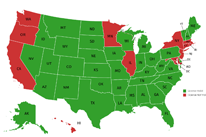 Your Florida Concealed Weapons
Permit, once issued, is valid for 7
years and is recognized in 37 states.
Your Florida Concealed Weapons
Permit, once issued, is valid for 7
years and is recognized in 37 states.
**Please note: This information is subject to change without notice.** .