✨ Welcome to our new update!
Руководство По Эксплуатации Iphone 2g -
Secure, scalable, and game-changing authentication for your applications. Get started in minutes with our powerful APIs and SDKs.
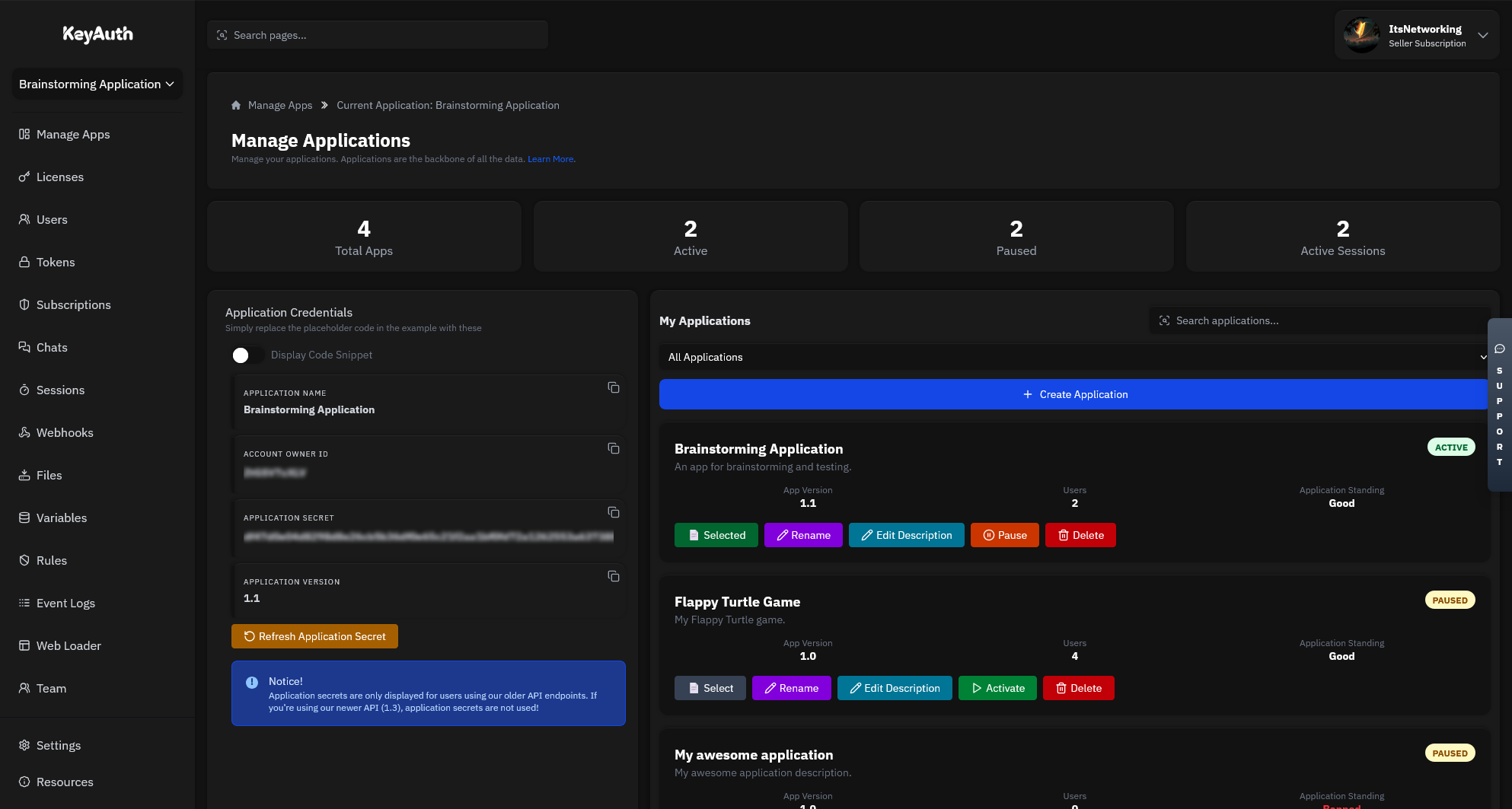
Secure, scalable, and game-changing authentication for your applications. Get started in minutes with our powerful APIs and SDKs.
Integrate into any programming language

A comprehensive suite of integrated tools for authentication, monetization, and user engagement.
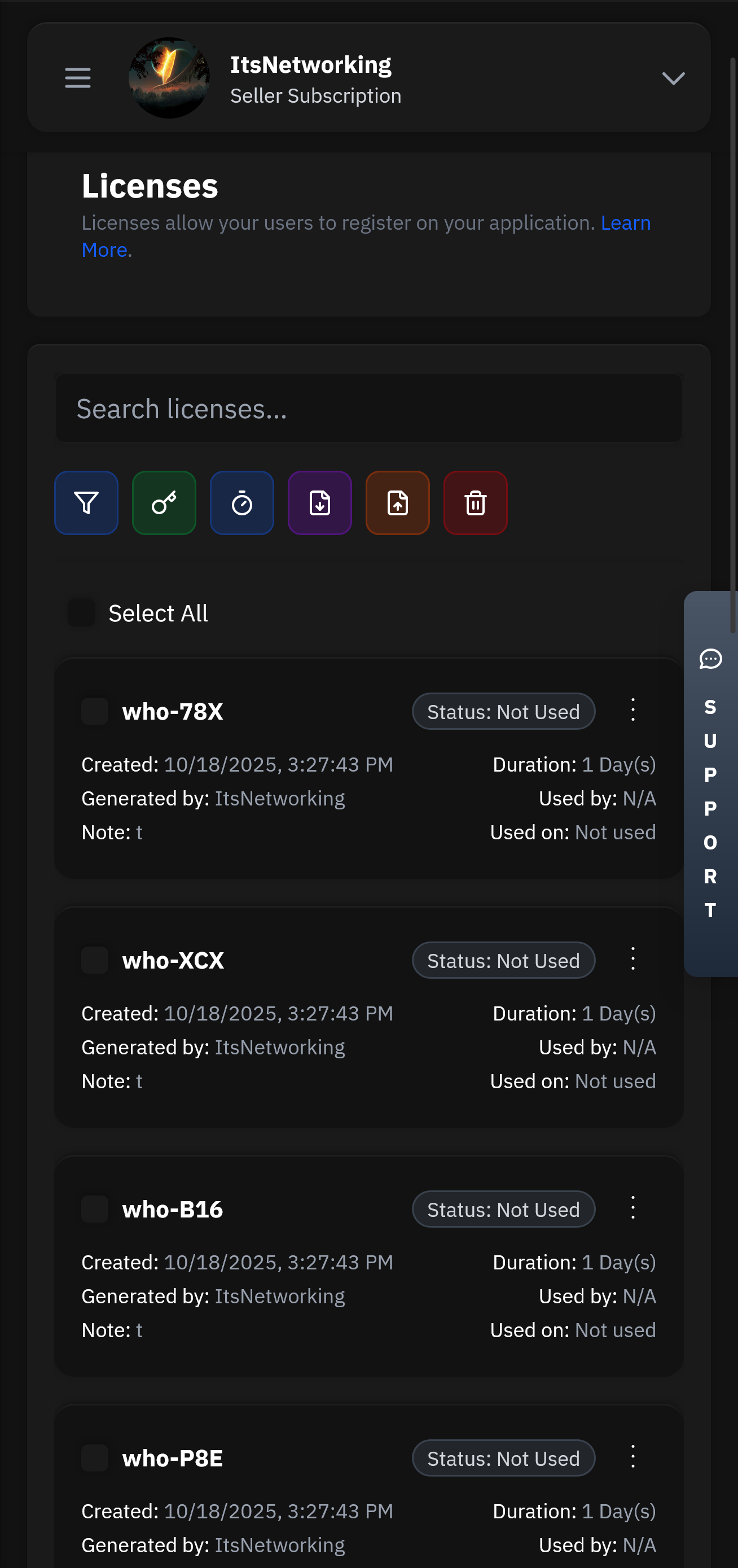
Create and manage user licenses with flexible expiration, trial, and subscription options.
Our lightning-fast infrastructure ensures your authentication requests are processed in under 50ms globally. With 99.99% uptime and redundant systems, your users will never experience delays.
Manage your applications remotely with our powerful Seller API. Update licenses, ban users, modify subscriptions, and monitor usage from anywhere in the world with full administrative control.
Built on a serverless architecture that automatically scales to handle millions of requests. Our global edge network ensures low latency and high availability across 300+ locations worldwide.
There's no question as to why we are the best choice for your business and one of the most used Authentication services.
Head over to our register page to create your account.
Applications will be the heart of your service. This is where all your users, licenses, chats and more will be stored.
Head over to our GitHub to find our examples and client API files. Simply follow the steps and have authentication up in less than 5 minutes.
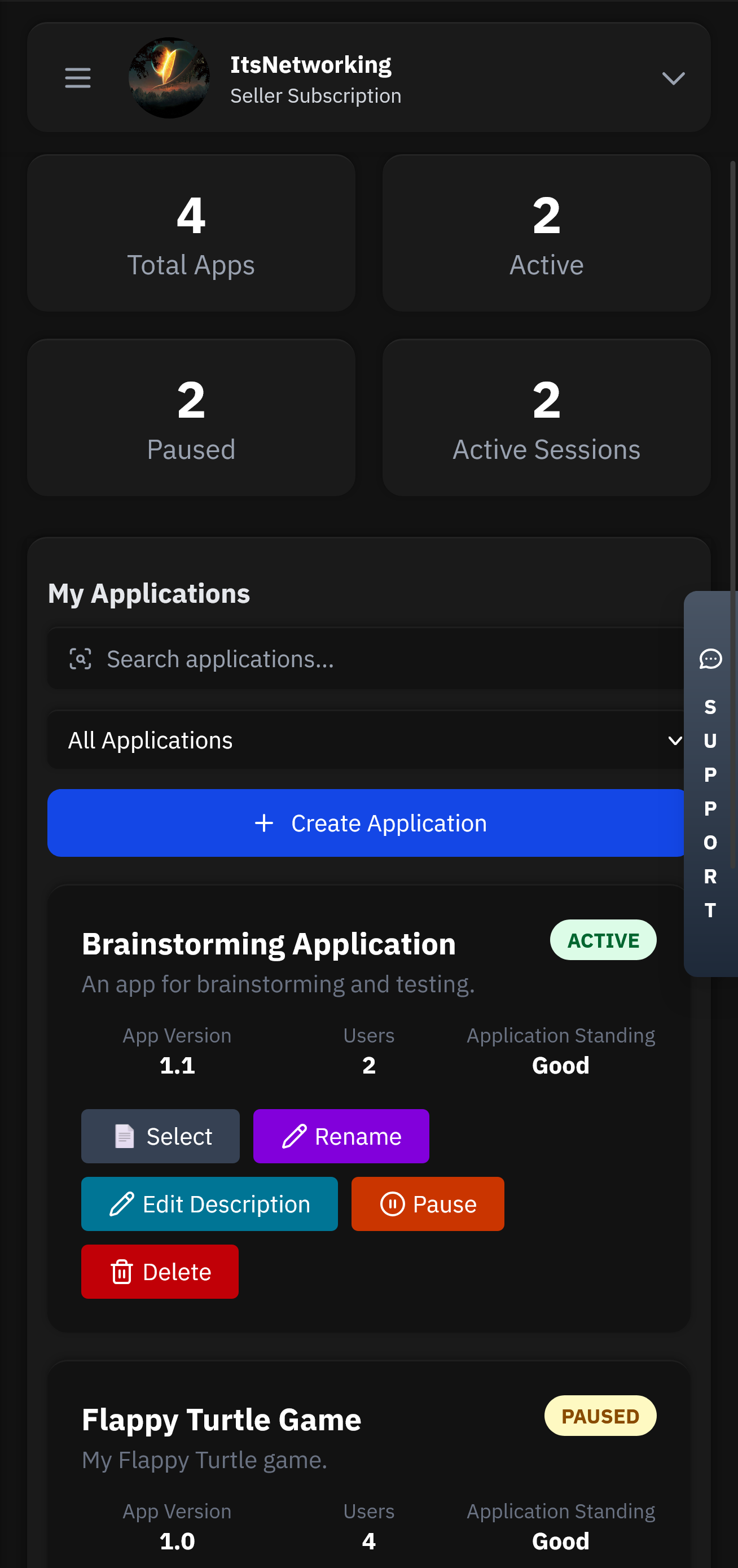
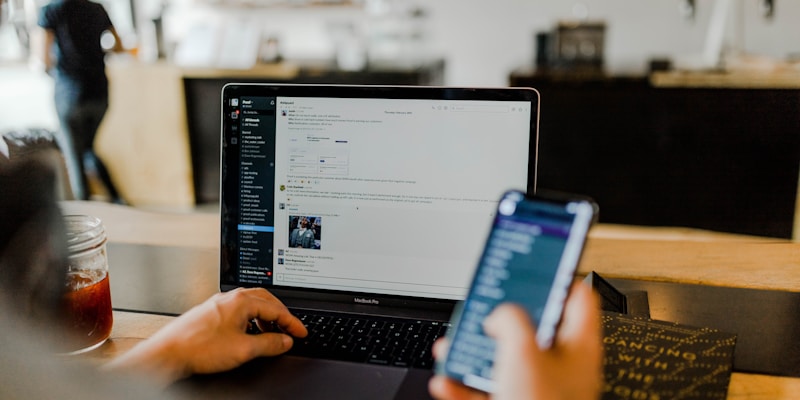
Control your application from anywhere using our mobile app. Manage licenses, chat with users, and view analytics directly from your phone or tablet.
Flexible options for teams of all sizes.
The 2G manual now seems archaic, yet it established the visual grammar Apple continues to use. The Руководство по эксплуатации iPhone 2G is more than a relic of early smartphone history. It is a carefully crafted technical document that balanced innovation with usability, minimalism with clarity. By analyzing its structure, rhetoric, and Russian localization, we see how Apple trained a global audience to adopt gesture-based computing. The manual succeeded because it treated the user as intelligent but unfamiliar with touchscreens—a challenge that remains relevant with each new interface paradigm (AR/VR, voice, etc.).
| Chapter | Title (Russian) | English Equivalent | Key Content | |---------|----------------|--------------------|--------------| | 1 | Введение | Introduction | Buttons, ports, sleep/wake | | 2 | Основные функции | Basic Functions | Home screen, multitouch gestures | | 3 | Телефон | Phone | Contacts, voicemail, conference calls | | 4 | Visual Voicemail | Visual Voicemail | Unique to iPhone | | 5 | Музыка и видео | Music & Video | iPod integration | | 6 | Safari | Safari | Web browsing on EDGE | | 7 | Карты | Maps | Google Maps (no turn-by-turn) | | 8 | Календарь | Calendar | Sync with iCal, Outlook | | 9 | Фото и камера | Photos & Camera | Camera roll, slideshow | | 10 | Настройки | Settings | Airplane mode, Wi-Fi, parental controls | | 11 | Приложения | Apps | Stocks, Weather, Notes | | 12 | Безопасность и уход | Safety & Care | Battery, cleaning, disposal |
[Your Name]
[Current Date] Abstract (150–200 words) This paper analyzes the Руководство по эксплуатации iPhone 2G —the Russian-language version of the original iPhone user manual released in 2007. As Apple’s first mobile phone, the iPhone 2G redefined smartphone interaction through its multi-touch interface, visual voicemail, and integrated iPod functionality. The user manual served not merely as an instruction set but as a rhetorical tool for shaping user behavior and expectations. This study employs genre analysis, visual rhetoric, and usability theory to examine the manual’s structure, language, and instructional design. Key findings show that the manual minimized traditional safety warnings in favor of minimalist, icon-driven guidance—reflecting Apple’s broader design philosophy. The paper also explores how the Russian translation adapted Western technical discourse for post-Soviet consumers unfamiliar with capacitive touchscreens. Ultimately, the iPhone 2G manual represents a transitional document between feature-phone user guides and modern digital-first help systems.
Technical Communication / History of Technology

Got questions? We've got answers. If you can't find what you're looking for, feel free to reach out to our support team.