ABOUT

We are the ARCHUB Architects, a full-service design and consulting group specializing in environmental design architecture and research. Founded at Abu Dhabi University, ARCHHUB Architects is led by Mohamed Elkaftangui, Nadia Mounajjed, and Alessandra Misuri. It is committed to developing architectural designs towards a contemporary interpretation embodying an environmental and sustainable approach.
ARCHUB's projects encompass housing, public buildings, art, and interior design. Their projects are in the United Arab Emirates, but the team’s professional experience has been extended in Europe and Africa.
While practicing architecture, ARCHUB documents and discusses its reflections on architecture, culture, and arts through publications, architectural exhibitions, and academic lectures and presentations.

MISSION

The thoughtful, collaborative, and lasting creation of architecture can impact quality of life for those who use it. ARCHUB ARCHITECTS is devoted to crafting exclusive and responsive spaces that go beyond the standard building experience. We believe in our responsibility as designers to provide clients with projects that are sustainable and responsible.

PROCESS

A design process informed by research, encompassing every phase:
from planning to programming, as from concept to development.

Environmental assessment and building energy performance.

Optimized design process that leads to sustainable design.

ARCHUB
ARCHITECTURAL DESIGN

ARCHUB believes that the most important key to success in the design thinking process is to improve the use of creative thinking throughout the different phases of the project.
To keep improving the quality of our solutions, we focus on the end user and create a collaborative environment working on refining ideas. In our projects, we create solutions to combine aesthetics, costs, durability, and environmental responsibility.  

ARCHUB
ENVIRONMENTAL STUDIES

Architecture and its environment are interdependent on one another. The environment gives context to its architecture, architecture defines its environment.
In our projects, we provide important care to the thermal comfort of users by the creation of building systems that are adapted to the local environment and functions of the space. We control factors like insulation, solar gain, thermal inertia, and air ventilation.
By adopting an environmental design approach through our scientific engagements, ARCHUB ARCHITECTS possesses a unique advantage over traditional architecture firms when it comes to design and construction.
Most of our architectural projects are subjects of research and publications in conferences and journals. 

ARCHUB
BUSINESS INCUBATOR

ARCHUB gives junior architects and alumni access to mentorship, investors, and other support to help them to move beyond their embryonic phase.
ARCHUB provides support and coaching for new architectural projects businesses that have a promising idea, as well as for entrepreneurs still in the idea stage.
In addition to mentorship, our business incubators give young architects access to logistical and technical resources as well as shared office space.  

Gotube | Goanimate

“Gotube” is not an official term but a fan-created label for a specific era and style of content on GoAnimate (now Vyond). This paper treats it as a case study in digital folk culture. The Gotube Subculture: Deconstructing Parody, Anarchic Humor, and Digital Folklore within the GoAnimate/Vyond Community Author: [Your Name] Course: Digital Media & Internet Culture Date: April 14, 2026 Abstract This paper examines the informal, user-generated micro-genre known as “Gotube” within the GoAnimate (now Vyond) animation platform. Emerging between 2012 and 2018, Gotube content is characterized by low-fidelity character rigging, text-to-speech (TTS) dialogue, repetitive slapstick violence, and meta-narratives about YouTube content moderation. This paper argues that Gotube functions as a form of digital folk art—a reactionary parody of mainstream animation and corporate online platforms. Through analysis of common tropes (e.g., “groundings,” “video removals,” “copyright strikes”) and community linguistics, the study situates Gotube within broader traditions of absurdist internet humor and anti-corporate play. 1. Introduction GoAnimate, launched in 2007 as a business-oriented animated video creation tool, became an unexpected breeding ground for amateur satire. By the early 2010s, a subset of users—many under 18—began producing videos that subverted the platform’s professional intent. These videos, collectively referred to as “Gotube” (a portmanteau of “GoAnimate” and “YouTube”), focus on parodies of YouTube’s own ecosystem: creators making videos about their videos being taken down.

Despite their crude production values, Gotube videos reveal sophisticated understandings of algorithmic culture, intellectual property enforcement, and online persona. This paper provides the first structured academic overview of the Gotube phenomenon. 2.1 GoAnimate → Vyond GoAnimate rebranded to Vyond in 2018, distancing itself from the amateur parody content that flourished on its platform. The “Gotube” label persists among archivists and fan communities as a marker of the pre-2018 era. 2.2 Gotube vs. “Gotenix” While “Gotube” refers broadly to GoAnimate parody culture, “Gotenix” is a specific YouTube channel (active c. 2014–2017) whose hyperactive, repetitive style became the archetype for the genre. Many creators explicitly copied Gotenix’s visual and narrative formulas, leading scholars of internet memetics to classify Gotenix as a “meme progenitor” (Phillips, 2019). 3. Core Aesthetic and Narrative Conventions Gotube videos exhibit a remarkably consistent set of features: gotube goanimate

| Feature | Description | Example | |---------|-------------|---------| | | Microsoft Sam, “Ralph,” or “Mike” voices delivering dialogue in monotone | “You are so banned!” | | Character rigging | Static limbs; characters slide rather than walk | “T-pose” gliding | | Recurring scenarios | A character is “grounded,” “banned,” or has a video “copyright striked” | “Daddy, no grounding!” | | Slapstick violence | Looping punch/kick animations, often accompanied by a “BOOM” sound effect | 30-second fight scenes | | Meta-YouTube commentary | Characters discuss view counts, dislikes, and community guidelines | “This video has been removed for hate speech” | 4. Theoretical Framework: Parody as Resistance Following Bakhtin’s (1984) concept of the carnivalesque , Gotube videos invert official hierarchies: children punish parents, characters destroy YouTube’s headquarters, and TTS voices mock corporate language (“Please subscribe and hit the bell icon”). This is not merely childish humor; it is a form of algorithmic parody —mocking the opaque, automated moderation systems that young creators experience as arbitrary and punitive. “Gotube” is not an official term but a

By 2020, the Gotube style had largely migrated to private Discord servers and archival YouTube channels (e.g., “Gotube Archive,” “Lost GoAnimate Episodes”). However, its influence persists in newer genres like “YouTube Poop” (YTP) and “Skibidi Toilet”’s asset-repurposing logic. The Gotube subculture of GoAnimate represents a unique intersection of amateur animation, algorithmic critique, and carnivalesque humor. Despite—or because of—its technical crudeness, Gotube offers a working-class digital poetics: young creators using limited tools to narrate their struggles with platform governance. Future research should explore Gotube’s legacy in AI-generated animation and automated content farms. Emerging between 2012 and 2018, Gotube content is

No direct URLs are provided due to the ephemeral nature of Gotube content; many original videos have been deleted or age-restricted. Archival research conducted via the Wayback Machine and private community databases (2023–2025).
ALESSANDRA MISURI
ALESSANDRA MISURI
Principal Partner of ARCHUB
[email protected]

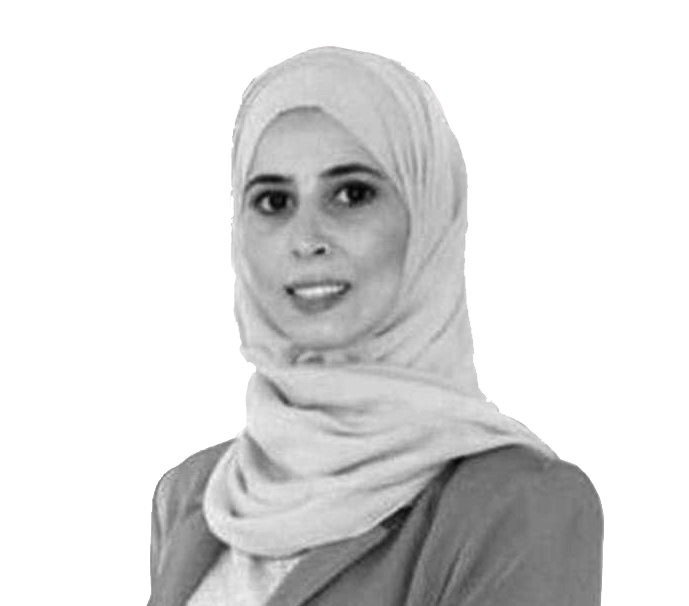
Arch. Alessandra Misuri is an Italian Architect with more than 20 years of experience in Architecture and Interior Design. Graduated from University of Florence, and License by Italian Professional Association of Architects O.A.P.P.C equivalent RIBA Part III as well as UAE license. Her working experience spans between Europe, UAE, and Africa for high-end Hospitality, Residential, Commercial and Retail projects. In UAE she has been appointed as Associate Architect and Design Manager by prestigious International Architecture and Design Firms. Awarded by UNESCO Award, her faculty experience at Abu Dhabi University focus on fostering talents for future challenges. Her expertise emphasis on creative solutions, with valued engineering awareness and competences joined with a solid materials and market knowledge. Her deep-rooted passion and constant research in new trends in Architectures and Design is a steady purpose in her professional and academic experience. Professionally she built strong customer confidence and trust, establishing a long-term alliance and relationship over several years.

AYA DIBAJEH
AYA DIBAJEH
Associate Partner of ARCHUB
[email protected]

Ms. Aya Dibaje is a Teaching Assistant of Architecture and Design with 8 years of experience, and providing exceptional administrative support. She received her master’s degree in sustainable architecture from Abu Dhabi University in 2018. Her research focuses on sustainability, building skins, and passive design strategies. She worked as a teaching assistant for several courses in Architecture, such as design courses, technical drawing, and software courses. In addition to her role in the Architecture department, she actively enhances the overall student experience by coordinating various student services, including academic advising, counseling, and engaging events. Her passion for design, coupled with hands-on experience in 3D printing and laser cutting, inspires and equips the next generation of architects and designers for success in the dynamic field.

AHMED AL AWAWDA
AHMED AL AWAWDA
Associate Partner of ARCHUB
[email protected]

Mr. Ahmed Al Awawda is a Teaching & Model Making Lab Assistant of the Architecture and Design Department at Abu Dhabi University with more than 7 years of experience in the academic sector in teaching and providing exceptional administrative support. He received his master’s degree in sustainable architecture from Abu Dhabi University in 2018. His research focuses on passive design strategies. He worked as a teaching assistant for several courses in Architecture, such as design courses, technical drawing, and software courses. Ahmed plays a pivotal role in the Architecture department, where he oversees the technical facets of the department's facilities. He is particularly adept at managing and supervising the use of advanced machinery at the Architecture lab. Under his guidance, students gain hands-on experience, mastering the art of precision and innovation in architectural design. His commitment to bridging theoretical knowledge with practical skills makes Ahmed an invaluable asset to both faculty and aspiring architects within the department.

WhatsApp Text Message:
+971 503348467

Abu Dhabi:
+971 2 5015605 
+971 509946062

Al Ain:
+971 508431792

Abu Dhabi University Campus, Al Ain road, Zayed City
Al Ain Campus, Al Muwaij’ial – Al Sallan – Al Ain 

On appointment:
Monday to Thursday from 9:00am to 18:00pm

OUR LOCATION MAPS

Abu Dhabi

Al Ain

ARCHUB
ARCHUB

Follow Us!

gotube goanimate

AI Website Maker