
Download Official Ola TV and Kshaw Latest Apk on your Android devices and FireStick TV to watch more than 1000+ live TV channels absolutely free
Download Ola TVDownloader Code: 3592596
Download KshawDownloader Code: 771847
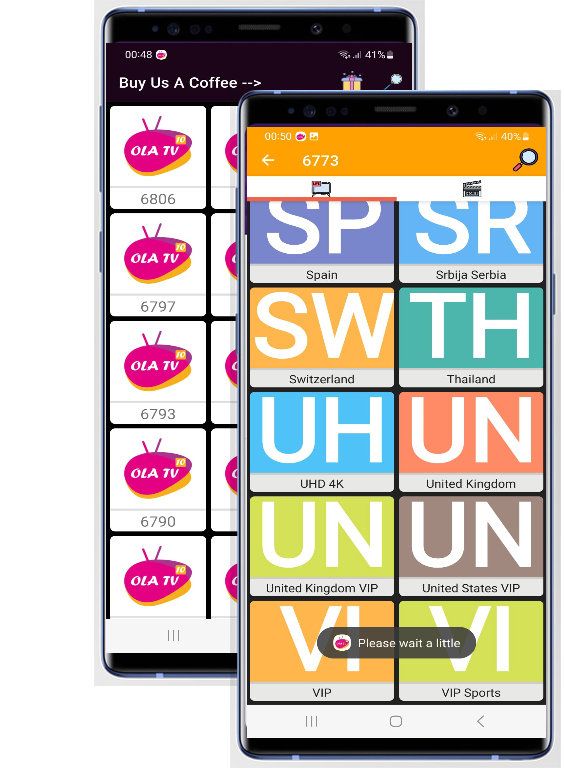
Download Official Ola TV and Kshaw Latest Apk on your Android devices and FireStick TV to watch more than 1000+ live TV channels absolutely free
Download Ola TV
We are no longer using ADS,Your donations power our ongoing enhancements. Contribute now for a seamless experience.



 Donate with Paypal here
Donate with Crypto here
Donate with Paypal here
Donate with Crypto here
Hex and Echo exchanged glances. The paradox had been triggered. Their client had entered a where the game’s logic accepted altered values—ammo, accuracy, radar—without the server ever noticing because the state they had forged was a fixed point in the hash function. For a few seconds, they could move through walls, fire perfect headshots, and see the entire map—all while the server thought everything was normal.
It wasn’t perfect, but it was enough. The night they decided to test the candidate, the two met in a rented office building with a wall of monitors. The room smelled of cheap coffee and ozone. Hex launched a private CS2 server, loaded the Mirage map, and set the match clock to 03:14:15. Echo ran the emulator in the background, injecting the candidate state as soon as the server tick hit the exact value.
MIRAGE: 03:14:15 Hex recognized the coordinates immediately—Mirage, the classic CS map, and a timestamp. He logged into a private server, joined a match, and waited until the clock on his HUD hit exactly 03:14:15. At that moment, the world seemed to stutter, like a film reel catching on a broken frame. A faint echo of a distant explosion reverberated through his headphones, even though the round was still in the buy phase. cs2 paradox keygen
It was a problem that bordered on the impossible, but the allure of breaking Valve’s defenses was too strong. Hex wasn’t alone. The message from ΩΔΣ hinted at a larger organization, a collective of elite reverse engineers known as The Resonance . Their members communicated only through glitches, timestamps, and hidden audio cues. Over the next few weeks, Hex exchanged fragmented data packets with an anonymous partner who identified themselves as “Echo.”
if (hash(state) == paradox_signature) { // Paradox activation cheat_mode = true; } The was a 256‑bit hash, generated by a recursive algorithm that referenced the game’s own memory map. It was a classic fixed‑point problem: the output of the hash was fed back as input, creating a self‑referencing loop. The only way to satisfy the condition was to find a state that, when hashed, produced its own hash—a mathematical paradox. Hex and Echo exchanged glances
if (time == now) { unlock(); } For weeks, the line had haunted Alexei “Hex” Kovalenko. He was a prodigy of the old‑school cheat scene, the kind who could reverse‑engineer a game in a single night and leave a trail of bewildered anti‑cheat engineers in his wake. But Counter‑Strike 2 (CS2) was different. Valve had built a fortress of encryption and machine‑learning–driven detection that made the old tricks look like child’s play.
Echo sent him a custom tool—an emulator that could replay game states at arbitrary speeds, allowing Hex to “time‑warp” his client’s clock without alerting the server. By iterating through billions of possible states and feeding each through the recursive hash, Echo’s program eventually stumbled upon a that produced a hash with a 30‑bit prefix matching the known signature. For a few seconds, they could move through
In the conference’s Q&A, a question appeared from an audience member whose username was simply . The question read: “What happens if the fixed point is never reached? Does the loop become an infinite recursion, or does the system collapse into chaos?” Mira smiled. She didn’t know the answer, but she felt a thrill in the unknown. Somewhere, far away, a server ticked on, and at 03:14:15, a hidden function waited for a state that might never exist—yet the possibility kept the world turning.