Buffy The Vampire Slayer Season 8 Comics ✔

This expansion, however, comes at a thematic cost. The television show’s genius lay in its metaphor: vampires as addiction, high school as hell, the patriarchy as a literal god. Season 8 attempts to scale that metaphor to a post-9/11 world of surveillance states and asymmetric warfare. The Slayer army is hunted by the U.S. military and a mysterious cabal; Buffy issues orders from a war room; her friends debate the ethics of drone strikes (albeit magical ones). Yet the intimacy that made those metaphors land—Buffy crying in her mother’s kitchen, Willow’s grief in a dorm room—is largely lost. The castle’s hallways never become as lived-in as the Summers’ home. The problem is not that comics cannot do intimacy (they can, brilliantly), but that Season 8 is so intoxicated by its own freedom that it forgets to ground its wonders in recognizable human texture. The result is a season that feels less like a continuation and more like a fever dream: the same characters, but projected onto a canvas too vast for their familiar gestures.

The most immediate shock of Season 8 is its geography. The television show, even at its most epic, thrived on compression: Sunnydale’s main street, the library, the Magic Box, Buffy’s living room. The Hellmouth was a local disaster, and even world-ending threats were filtered through high school anxieties and rent payments. Season 8 explodes this container. Buffy now commands a global army of nearly two thousand Slayers, operating out of a castle in Scotland—a literal fortress, not a high school. Action sequences involve Slayers on rocket launchers, battles in Tokyo, and a heist on a demon bank housed inside a subatomic dimension. The visual language of comics, freed from budget constraints, allows Joss Whedon and his collaborators (notably Georges Jeanty’s expressive pencils) to stage set pieces that would have bankrupted a television studio. In issue #3, a Slayer flies by literally launching herself from a fighter jet. The effect is exhilarating and alienating in equal measure. buffy the vampire slayer season 8 comics

This plot point ignited fierce fan controversy, and understandably so. On its surface, it reduces a complex female hero’s arc to a magical sex act that ruins the world—a tired trope. But read with care, Season 8 is not endorsing this logic; it is anatomizing it. Twilight represents the seduction of surrender—the desire to hand over one’s agency to a higher power, a lover, a destiny. Buffy’s television journey was about rejecting such surrender again and again (to the Master, to Angel’s curse, to the Watcher’s Council, to the First Evil). Season 8 asks: what happens when the person you’d surrender to is yourself? When the power you wield is indistinguishable from the power that corrupts? The season’s climax has Buffy literally killing the goddess inside her—a version of herself that achieved godhood by escaping pain. The message is harsh but coherent: there is no escape from the work of being human, not even for the Chosen One. The comic’s sprawling, messy narrative is the shape of that lesson. This expansion, however, comes at a thematic cost

When Buffy the Vampire Slayer concluded its television run in 2003, it did so with a quiet, radical image: Sunnydale, the Hellmouth and emotional cradle of the series, swallowed into the earth. Buffy Summers, no longer the Chosen One but simply one of hundreds of activated Slayers, stood in a crater and smiled at the ambiguity of the future. It was a finale about decentralization—of power, of geography, of narrative. Seven years later, Dark Horse Comics launched Season 8 , an ambitious direct-to-comic continuation that promised to honor the show’s legacy while exploding its scale. Instead of a modest epilogue, readers received jet-propelled Slayers, a hundred-foot-tall Dawn, inter-dimensional bank heists, and a final confrontation with a godlike entity named Twilight. In its thirty-nine issues (plus specials), Season 8 functions as both a thrilling, flawed experiment and a revealing case study in the tensions between televisual intimacy and graphic maximalism. Ultimately, the season fails as a straightforward narrative sequel—it is too sprawling, too self-conscious, too eager to deconstruct its heroine—but succeeds brilliantly as a meta-commentary on the impossibility of returning home, the burden of a world that has moved past its own apocalypse, and the vertigo of power without clear limits. The Slayer army is hunted by the U

Reading Buffy the Vampire Slayer Season 8 today, nearly two decades after its publication, is to witness a beloved text struggling with its own afterlife. The comic is overstuffed, uneven, and at times deeply uncomfortable. It turns its heroine into a near-villain, its love interest into a cosmic dupe, and its found family into a fractured chain of command. And yet, it is also the only possible sequel for a show that ended by breaking its own central premise. You cannot give Buffy an army of two thousand Slayers and then send her back to the cemetery. You cannot end the line of the Chosen One and then tell small stories. Season 8 fails gracefully, precisely because it attempts the impossible: to remain faithful to the textures of a television show while embracing the unbounded logic of comics. In its best moments—Buffy riding a horse through a desert of dead Slayers, Willow rebuilding reality with her fingertips, Xander crying over a lost eye—the comic finds a new register: epic, melancholic, aware that every victory plants the seed of the next apocalypse. The final image of the season is not a crater but a castle, rebuilt. Buffy stands on its ramparts, looking out at a world she has saved but not solved. It is not an ending. It is a promise of more nights—and that, perhaps, is the most honest sequel of all.

Season 8 ’s most significant flaw is its inability to sustain its political allegory. The early issues set up a compelling parallel between the Slayer army and a global insurgency, complete with a rogue general and a “Slayer Activation Network” that feels like a terrorist cell. But this thread dissolves into the Twilight plot, leaving its questions unanswered. What does it mean to lead an army of teenage girls? How does Buffy’s authority differ from the Watcher’s Council she overthrew? The comic gestures at these questions—a subplot involving a rogue Slayer who commits atrocities, a betrayal by a trusted ally—but never commits to them. The reason, perhaps, is that Buffy was always a family drama disguised as an action show. The television series’ most resonant conflicts were between Buffy and Giles (father), Buffy and Willow (sister), Buffy and Spike (unwanted mirror). Season 8 replaces these dyads with a command structure. The final arc jettisons geopolitics entirely, retreating to a pocket dimension where Buffy must face not an army but her own heart. It is a retreat that feels like an admission: the world is too large, but the soul is just the right size.

At the center of Season 8 stands not a vampire lord but a philosophical crisis. The villain—Twilight, later revealed to be a cosmic force using Angel as its avatar—offers Buffy a bargain: transcendence. The Twilight dimension promises a world without demons, without death, without the endless grind of patrol. For a heroine defined by her sleepless vigilance, this is both temptation and insult. The season’s darkest turn comes when Buffy, in a moment of apocalyptic passion, sleeps with Angel, triggering the transformation of the world. The act is a betrayal of everything she has built—not only of her relationship with the Slayers who trust her, but of her own hard-won ethos that power means staying awake, staying present, staying human.

buffy the vampire slayer season 8 comics

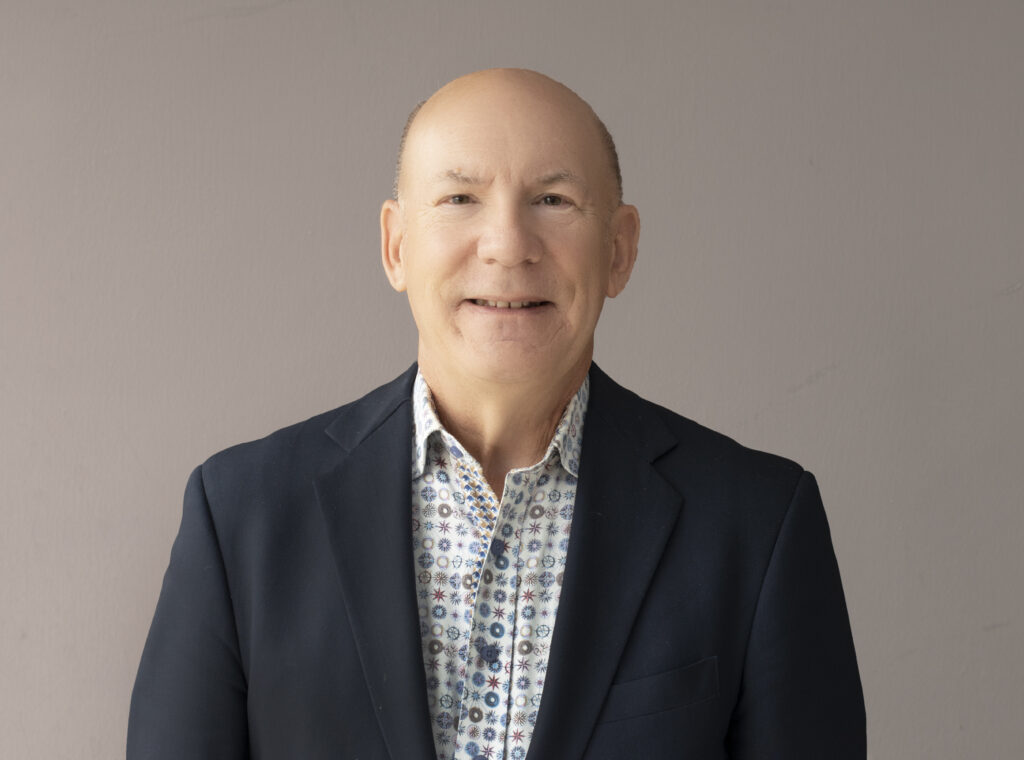
Frank Altman

Non-Executive Director

Frank Altman is the founder and first CEO of Community Reinvestment Fund, USA. As CRF’s founder, Altman pioneered the development of a secondary market for community and economic development loans. Since 1988, under Altman’s leadership and in partnership with a network of more than 200 local community partners, CRF has funded more than $3.5 billion in loans to job-creating small businesses, non-profits, charter schools and affordable housing projects in 50 states plus the District of Columbia and more than 1,000 communities across the United States.
 
Altman helped design the creation of the federal New Markets Tax Credit to encourage private investment in low-income communities and is a founding member and first President of the New Markets Tax Credit Coalition. He is also a member of the Center for Community Development Investors at the Federal Reserve Bank of San Francisco and an advisor to the Social Innovation Initiative at Brown University and the Center for Impact Finance at the University of New Hampshire. His work has been featured in Inc. Magazine, where he was named one of its Entrepreneurs of the Year, and he received Fast Company’s Social Capitalist award.
 
Altman has been awarded the Economic Development Innovation Award from GIS Planning Inc. and fDi Intelligence for his contribution to the field of economic development. Altman is a Senior Fellow at Ashoka, the world-wide network of social entrepreneurs and a founding member of Kindred.
 
More recently, in September 2023, Altman authored a book published by Forbes and titled “A New Capitalism: Creating A Just Economy That Works For All.”It is available in physical and online book stores and on Audible.
buffy the vampire slayer season 8 comics

Michael Jainzik

Independent Non-Executive Director

Michael Jainzik works as an independent consultant and brings his extensive expertise in the areas of agricultural finance, international investments, risk management and corporate governance. He is currently based in Rome, Italy.
 
From 2001 to 2011, Michael worked as an investment professional at KfW Development Bank, focusing on international debt financing and equity investments in investment funds and banking institutions, mainly in the areas of agricultural finance and microfinance. From 2011 to 2015 he worked as Director of KfW’s office in Windhoek. In this role, he helped manage and develop KfW’s EUR 250 million portfolio in Namibia. From 2015 to 2017, he took on the position of Head of Corporate Development at Access Microfinance Holding, where he was responsible for structuring and leading a merger process between Access Holding and another company.
 
Prior to joining Babban Gona, Michael served as a non-executive director in Access Bank Azerbaijan (2006-2011, Chairman), Belarusian Bank for Small Business (2008-2011), Rural Impulse Fund II Luxemburg (2010-2011) and AB Bank Zambia (2011-2016).
 
Michael studied economics and management at the Universities of Lüneburg and Witten/Herdecke (Germany) and at ETEA – Universidad Loyola in Córdoba (Spain) and holds a Master’s degree in economics and management.
buffy the vampire slayer season 8 comics

Bello Maccido

Non-Executive Director

 Mr. Maccido is an accomplished Corporate and Investment banker with over 31 years post graduate experience. He had at different times served on the Boards of FBN Holdings Plc, First Bank of Nigeria Plc and Legacy Pension Manager Limited and is currently the Chairman, FBN Merchant Bank Ltd. Mr. Maccido is a Fellow of both the Chartered Institute of Stockbrokers and the Chartered Institute of Bankers of Nigeria. Mr. Maccido holds a Law Degree (LL.B) and a Masters Degree in Business Administration (MBA) from Ahmadu Bello University, Zaria and Wayne State University, Detroit, Michigan, USA respectively. He is a Barrister at Law (BL) of the Supreme Court of Nigeria and an Alumnus of the Executive Business Programs of the Harvard Business School and the IMD, Lausanne, Switzerland.
buffy the vampire slayer season 8 comics

Muhammad Sanusi, CON

Chairman of the Board

His Highness Muhammad Sanusi was appointed the 10th Governor and Chairman of the Board, Central Bank of Nigeria on 3 June 2009. He earned Bachelor’s and Master’s degrees in Economics from the Ahmadu Bello University, Zaria, and also has a first-class degree in Sharia and Islamic Studies from the African International University, Khartoum, Sudan.
 
From working as a lecturer at the Ahmadu Bello University, where he taught Economics, he joined the banking industry in 1985, and by January 2009 had risen to General Manager and Group Managing Director of First Bank of Nigeria PLC, Nigeria’s oldest and biggest bank. Mallam Sanusi has been conferred with a National Award of Commander of the Order of the Niger (CON) by the President of the Federal Republic of Nigeria and has also been awarded the “Global Central Bank Governor for 2010” by The Banker Magazine, a publication of the Financial Times.
 
He was also voted Central Bank Governor of the Year for Sub-Saharan Africa 2009 (an award he won again in 2010) by Emerging Markets, a publication of Euromoney Institutional Investors. In 2011, Mr. Sanusi was named Forbes Africa Person of the Year for 2011. He was also listed by TIME Magazine as one of the 100 most influential people in the world. Kola Masha (Managing Director) Prior to Babban Gona, Kola was a Managing Director and CEO of a major subsidiary in the Notore.
buffy the vampire slayer season 8 comics

Lola Masha

Non-Executive Director


Before joining Babban Gona, Lola was the Director for Trust and Safety at OLX Group, working across 30+ OLX markets to ensure that buyers and sellers can transact safely and securely on the platform. Prior to her global role at OLX, Lola was the Country Manager for OLX in Nigeria where she was responsible for driving all elements of the business including Business Development, Product Localization, Marketing and other relevant functions. OLX Group is one of the world’s leading online classifieds players. Through its brands including OLX, Avito, dubizzle and letgo, OLX Group is the home of online classifieds in high-growth markets.

These platforms are the leading destination for buying and selling used goods and services in 30 countries, and the #1 mobile app in its category in more than 20 markets. Globally ~ 11 million items are exchanged through its platforms every single month.

Prior to joining OLX, Lola spent 4 years at Google leading various Product Partnerships efforts across EMEA and Emerging Markets. Lola was one of the earliest Googlers in Sub-Saharan Africa when the technology company began its operations in the region.

Lola shaped the regional strategy, executed on several core initiatives and led business development efforts with key SSA partners including the telcos, OEMs, digital content providers and local entrepreneurs. Lola brings significant leadership experience in business development, entrepreneurship, operational transformation and product development across several industries including technology and financial services.

In addition to Africa, Lola has substantial international working experience in North America, Europe, and Asia. She also worked in the Chicago office of McKinsey & Company, where she spent time advising senior executives on extensive strategic management topics. Lola holds a Doctorate degree in Engineering from the UniversiAnnual Report 2019/2020 ty of California, Berkeley and a Bachelor of Science degree in Engineering from the University of Virginia. She is happily married with two kids.

buffy the vampire slayer season 8 comics

Kola Masha

Managing Director

 Prior to Babban Gona, Kola was a Managing Director and CEO of a major subsidiary in the Notore Group, one of Nigeria’s leading agricultural conglomerates, where he raised US$24 Million to develop an integrated agricultural trading, production and processing business.

Furthermore, he led the development and execution of Notore’s commercial strategy across West and Central Africa, preparing the company to sell one million tons of fertilizer and establish a modern seed business.

He led the effort to raise $130 million in equity and the restructuring of $360 Million in debt. Kola brings significant leadership experience in venture capital, corporate finance, business development, marketing and operations, across four continents with multiple global companies, including GE, Notore and Abiomed. In addition, Kola brings extensive public sector experience as Senior Advisor to the Nigerian Minister of Agriculture.

In recognition for his leadership in driving positive change on the African Continent, he has received several global awards including the prestigious Eisenhower Fellowship, a leading leadership institute led by General Collin Powell and appointed to the Board of the African Enterprise Challenge Fund, a $250 Million fund that awards grants and repayable grants to private sector companies to support innovative business ideas in agriculture, agribusiness, renewable energy, adaptation to climate change and access to information and financial services. Kola holds an MBA (Honors) from Harvard and a Masters in Mechanical Engineering from the Massachusetts Institute of Technology.

buffy the vampire slayer season 8 comics

Kola Masha


Prior to Babban Gona, Kola was a Managing Director and CEO of a major subsidiary in the Notore Group, one of Nigeria’s leading agricultural conglomerates, where he raised US$24 Million to develop an integrated agricultural trading, production and processing business.

Furthermore, he led the development and execution of Notore’s commercial strategy across West and Central Africa, preparing the company to sell one million tons of fertilizer and establish a modern seed business.

He led the effort to raise $130 million in equity and the restructuring of $360 Million in debt. Kola brings significant leadership experience in venture capital, corporate finance, business development, marketing and operations, across four continents with multiple global companies, including GE, Notore and Abiomed. In addition, Kola brings extensive public sector experience as Senior Advisor to the Nigerian Minister of Agriculture.

In recognition for his leadership in driving positive change on the African Continent, he has received several global awards including the prestigious Eisenhower Fellowship, a leading leadership institute led by General Collin Powell and appointed to the Board of the African Enterprise Challenge Fund, a $250 Million fund that awards grants and repayable grants to private sector companies to support innovative business ideas in agriculture, agribusiness, renewable energy, adaptation to climate change and access to information and financial services. Kola holds an MBA (Honors) from Harvard and a Masters in Mechanical Engineering from the Massachusetts Institute of Technology.